
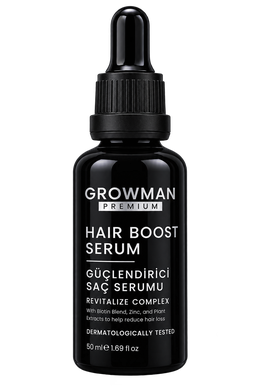
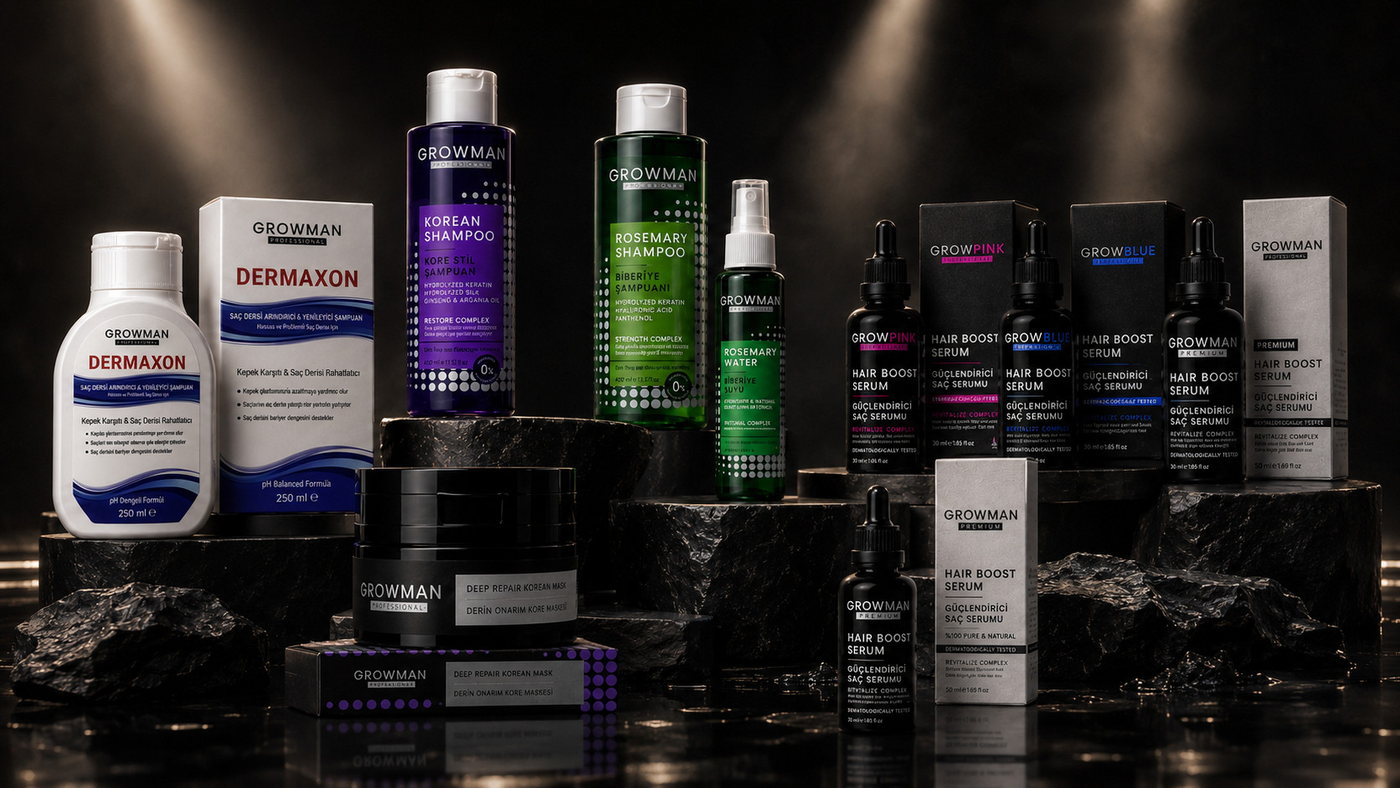
The EU CPNP notification is the visible step, and it is also the easiest one. Everything expensive happens before it: appointing a Responsible Person, commissioning a safety assessment and assembling a Product Information File that survives an inspection. Germany, the Netherlands, Poland and Romania all run on this single framework — which is why one compliance investment opens twenty-seven markets.
One notification, twenty-seven markets
The EU CPNP notification exists because Regulation (EC) No 1223/2009 replaced twenty-seven national registration systems with one. Article 13 obliges the Responsible Person to submit product information through the Cosmetic Product Notification Portal before the product is placed on the market. Once you notify, no member state asks for anything further.
For a distributor this is the strongest commercial argument in the whole compliance conversation. The cost of getting one formulation EU-ready is largely fixed, and it unlocks Germany, France, the Netherlands, Poland, Romania and the rest simultaneously. A buyer planning a single-country launch should still price the file as a European asset rather than a German or Dutch one.
The notification captures the product name and category, the ingredient composition — with specific treatment for nanomaterials and CMR substances — and the Responsible Person's name and address. It is a submission, not an approval: no authority reviews your product before sale. Responsibility for safety and legality stays with you.
The Responsible Person carries the file
Every cosmetic product on the EU market needs a Responsible Person established inside the Union. For a product manufactured outside the EU, that role commonly falls to the importer.
This is not a nominal appointment. The Responsible Person is legally accountable for:
- the product's compliance with the Regulation
- holding the Product Information File at their address, accessible to authorities
- the CPNP notification being accurate and current
- serious undesirable effect reporting
- corrective action, withdrawal or recall when required
Three practical consequences follow, and each has a cost:
- Your address goes on the pack. The Responsible Person's name and address are mandatory label elements.
- You need somewhere to keep the file for ten years after the last batch was placed on the market.
- You cannot delegate the accountability, only the work. Appointing a third-party Responsible Person service moves the legal role to them — which is a genuine option, and one many first-time importers take.
What the Product Information File contains
The Product Information File is where inspections actually land. It has to contain:
| Element | Detail expected |
|---|---|
| Product description | Enough to link the file unambiguously to the product |
| Safety report Part A | Safety data: composition, stability, microbiology, exposure |
| Safety report Part B | The assessor's reasoned conclusion |
| Assessor credentials | Diploma or proof of qualification |
| Manufacturing description | Process plus a declaration of GMP compliance |
| Label copies | As placed on the market |
| Claim substantiation | Evidence for every performance claim made |
Two elements catch importers out. First, someone holding a qualification in toxicology, medicine, pharmacy or an equivalent discipline has to sign the safety assessment — you cannot write it yourself. Second, claim substantiation is not optional. If the pack says a serum reduces breakage, evidence for that sits in the file. Remove claims you cannot support from the artwork before printing, not after an inspection.
Sequence and timing that keeps a launch on schedule
Most delayed EU launches are sequencing failures rather than regulatory ones. Work in this order:
- Screen the formulation against Annexes II to VI before anything else. A single restricted ingredient at the wrong concentration wastes every hour that follows.
- Collect the technical file from the manufacturer — quantitative formula, INCI, stability, microbiological and compatibility data, GMP evidence.
- Appoint the Responsible Person, whether that is your own company or a service provider.
- Commission the safety assessment. This is the longest single step and the one that depends on the manufacturer answering questions promptly.
- Finalise artwork with the Responsible Person address, country of origin, INCI list and period-after-opening.
- Notify through CPNP, then ship.
The dependency worth planning around is step four. Your assessor will come back with questions for the manufacturer, and a supplier who answers within a day rather than a fortnight compresses the whole timeline. That responsiveness is worth checking before you choose a supplier — it is a fair question to ask during the evaluation set stage.
Labelling traps for imported product
Imported cosmetics carry label obligations that domestically produced ones do not, and these are the ones that force reprints:
- Country of origin is mandatory for anything manufactured outside the EU. "Made in Türkiye" belongs on the pack from the first print run.
- The Responsible Person's name and address appear on pack, so you cannot finalise artwork before you decide who holds the role.
- The INCI list runs complete, in descending order of concentration above 1%.
- Language requirements are national. Each member state requires function, precautions and relevant warnings in its own language. A German launch and a Polish one need different panels even under one CPNP record.
That last point is the practical reason to decide your first three member states early. Artwork designed with a flexible multilingual panel costs nothing extra at design stage and saves an entire reprint later.
What this costs and how to phase it
An EU CPNP notification itself costs almost nothing. The work around it does, and the sequence determines whether that spend is efficient:
- Safety assessment per formulation. The largest single line, charged per product. This is where a supplier's technical file quality translates directly into your invoice.
- Responsible Person service, if you appoint one. Typically an annual fee plus a per-product charge.
- Artwork and multilingual panels. Cheap at design stage, expensive as a reprint.
- Ongoing maintenance. Every reformulation and pack change reopens the file.
Phase it by concentrating the first wave. Choose six to eight references that form a coherent routine rather than twenty that spread the fixed cost thin, get them fully EU-ready, and expand from a working file. A distributor who completes the EU CPNP notification for a tight opening assortment can add references later at marginal cost, because the Responsible Person structure and the supplier relationship already exist.
The counter-example is instructive. Buyers who notify a single hero product, launch, then discover they need a routine around it pay the full setup cost twice and lose a season doing it.
Choosing which member state to open first
One EU CPNP notification covers the Union, but a launch does not. Language panels, retail structures and competitive intensity vary sharply, and the first market shapes everything after it.
Germany is the largest prize and the least forgiving. Retail buyers expect a complete, evidenced dossier and a distributor who can hold stock. The upside is that a German listing validates you everywhere else in the Union.
The Netherlands and Belgium reward a tight pharmacy and drugstore assortment. Decision cycles are shorter than Germany's and the market is small enough to trial a routine without a national campaign, which makes Benelux a common first step for a cautious importer.
Poland combines scale with a fast-growing modern retail network, and price sensitivity that punishes a badly built ladder. Get the landed cost right and the volume is real.
Romania is smaller but growing, and Turkish suppliers already hold meaningful share there. Familiarity with Turkish product shortens the trust conversation considerably.
A sensible pattern is to notify once, open one market properly, and use the second market to test whether the assortment travels. Distributors who open four countries at once usually discover they have four half-supported launches rather than one working business.
Frequently asked questions
Does the EU CPNP notification approve my product?
No. Notification is a submission of information, not an authorisation. No authority reviews the product before sale. Legal responsibility for safety and compliance stays with the Responsible Person at all times.
Can my non-EU manufacturer be the Responsible Person?
Not unless they have an entity established in the European Union. For imported product the importer usually takes the role, or appoints an EU-based third-party Responsible Person service to hold it formally.
How long must I keep the Product Information File?
Ten years from the date the last batch of the product was placed on the market, and it must remain readily accessible at the Responsible Person's address in a language the authorities of that member state can understand.
Do I need a new notification for each country?
No. One CPNP notification covers the entire European Union. National labelling language requirements still apply per market, but the notification itself is not repeated country by country.
Who can write the cosmetic product safety report?
Only a qualified professional holding a degree in toxicology, medicine, pharmacy or a related discipline. Their name, qualification and signature form part of the Product Information File, so the credential has to be documented rather than asserted.
Building an EU assortment?
Send us the references you are considering and the member state you will launch in. We supply the INCI declarations, safety data and GMP evidence your assessor needs to start.