
Copper peptides have moved from technical ingredient conversations into mainstream scalp and hair care. That visibility creates an opportunity for distributors, but it also creates a familiar sourcing problem: two products can use the same peptide language while offering very different formulas, evidence files and claim risk. A buyer therefore has to evaluate more than the ingredient name on the front panel.
What copper peptides are
Copper peptides are small peptide structures associated with copper ions. Cosmetic product development often uses the phrase broadly, while the ingredient declaration must identify the specific material. That distinction matters because a marketing phrase such as "copper peptide complex" does not tell a buyer the INCI name, supplier specification, use level, delivery system or role of the ingredient in the finished formula.
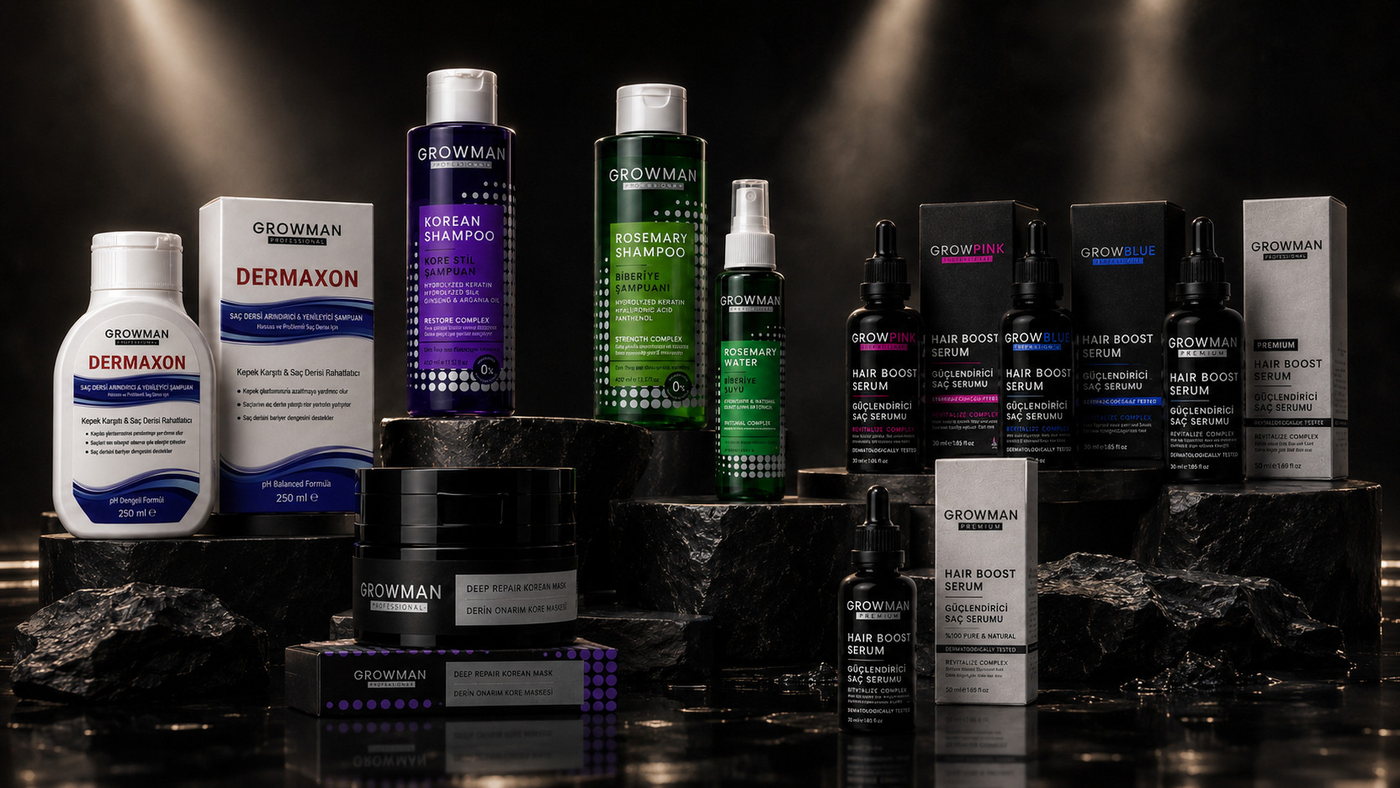
For range context, buyers can compare this ingredient-led approach with the wider Growman professional hair care portfolio and the separate guide to multi-peptide hair care.
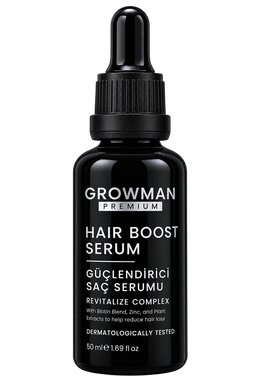
Growman's new peptide serum launch brings that sourcing conversation into two coordinated cosmetic products: a 50 ml Copper Peptide Hair Care Serum labelled with copper peptide, multi-peptide, niacinamide and biotin, and a complementary 30 ml Multi Peptide + Copper Peptide Skin Renewal Care Serum. International buyers can request evaluation samples, the current INCI information, available product documents, pack details and export pricing directly from the Growman team.
One of the best-known names in the wider peptide conversation is GHK-Cu, a copper complex of the tripeptide glycyl-L-histidyl-L-lysine. Hair research has also examined AHK-Cu, a different tripeptide-copper complex. A laboratory study indexed by the US National Library of Medicine reported that AHK-Cu stimulated elongation in isolated human hair follicles and proliferation in cultured dermal papilla cells under the study conditions. That is interesting formulation evidence, but it is not the same as proving that every finished copper peptide hair serum produces the same result in consumers. The PubMed record for the AHK-Cu study makes the model and limitations clear.
For an importer, this leads to the first rule: treat the ingredient, the finished formula and the marketed claim as three separate evidence questions. A credible supplier should be able to answer all three.
Buyers should therefore evaluate copper peptides as documented formulation components, not as a shortcut around finished-product testing.
Why hair care buyers are paying attention
The commercial attraction of copper peptides in hair care is easy to understand. Consumers increasingly recognise peptides from facial skin care, and the ingredient gives a scalp serum or premium routine a more technical story than a generic blend of botanical extracts. It can also help a distributor create a visible step-up from an everyday shampoo to a higher-value leave-on product.
That does not mean the range should be built around a serum alone. The strongest retail proposition normally connects three roles:
- Cleanse. A shampoo prepares the scalp and hair without carrying the entire active story.
- Condition or repair. A mask or conditioner addresses fibre feel, manageability and breakage appearance.
- Target. A leave-on serum carries the peptide-led communication and gives the routine its premium point.
This architecture matters because a peptide serum has a naturally higher information burden. The buyer, retailer and consumer will ask what the peptide is, why formulators include it and how consumers should use the product. A supporting routine makes those answers easier: the serum becomes the targeted step rather than an isolated bottle making every promise at once.
The INCI name comes before the marketing name
Before discussing packaging or price, request the complete ingredient declaration for the exact quoted product. Do not accept a presentation deck as a substitute for the label-ready INCI list.
Check four points:
- Exact identity. Which peptide or copper complex appears in the formula, and under what INCI name?
- Supplier documentation. Is there a technical data sheet, specification and safety information for the raw material?
- Finished-product status. Is the quoted INCI list the current production version, not an early development draft?
- Market review. Did a qualified reviewer assess the formula and wording for the market in which you intend to sell it?
The European Commission's CosIng cosmetic ingredient database is useful for checking names and functions, but the Commission explicitly notes that an INCI entry does not, by itself, prove approval for any use or concentration. The applicable cosmetics regulation and its annexes remain the legal reference. A distributor should therefore use CosIng as an identification tool, not as a regulatory approval certificate.
This level of checking also protects SEO copy. Search-led phrases such as "GHK-Cu hair serum" or "copper tripeptide scalp serum" should appear on a product page only when they accurately describe the marketed product. Ranking for an ingredient the pack does not contain is not optimisation; it is a claims and trust problem.
How to evaluate a copper peptide hair formula
A good evaluation process examines the formula as a system. Ask the manufacturer to explain the role of the peptide alongside the base, supporting ingredients, packaging and instructions.
1. Formula format
Leave-on serums are the most obvious format because they keep the ingredient story on the scalp for longer than a rinse-off product. That does not automatically make them superior. The finished product still has to spread cleanly, dry without residue and fit the consumer's routine. Test it on dry and damp scalp, under styling products and across the climates relevant to your market.
2. Compatibility and stability
Peptides are formulation ingredients, not decorative label text. Ask how the manufacturer assessed stability in the final formula and final pack. A buyer does not need the manufacturer's confidential formula, but should expect a clear answer on stability protocol, packaging compatibility, shelf life and storage conditions.
Colour is particularly important in copper-led products. A blue or turquoise appearance can reinforce the story, but colour alone proves nothing about ingredient identity or concentration. It can also change over time. Review aged samples and production-retained samples rather than judging only a fresh laboratory batch.
3. Supporting ingredients
Many peptide hair serums combine the headline active with humectants, conditioning agents, botanical extracts or other peptides. Evaluate whether those ingredients create a coherent cosmetic benefit. A focused formula is easier for a retailer to explain than a label containing ten fashionable actives with no clear role.
4. Packaging and dose
Droppers look technical but may be inconvenient for direct scalp application. Pumps and narrow nozzles can give more repeatable use. Ask about the dose, intended number of applications and whether the directions match the volume. Those details affect repurchase timing and the honesty of value comparisons.
5. Sensory performance
The consumer will experience texture before any long-term benefit. A copper peptide hair serum that feels sticky, pills under styling product or leaves visible residue will struggle to repeat, regardless of the ingredient story. Include sensory testing in the evaluation set and record the conditions: hair density, scalp oil level, climate and products layered on top.
Claims, evidence and regulatory discipline
Copper peptide hair care sits close to language that can become medical very quickly. "Supports fuller-looking hair" and "helps improve the appearance of fragile hair" are cosmetic statements. "Treats alopecia," "reactivates dormant follicles" and "stops hair loss" may imply treatment or prevention of a medical condition.
In the European Union, cosmetic claims must follow the common criteria in Commission Regulation (EU) No 655/2013, including truthfulness, evidential support, honesty and informed decision-making. Similar principles appear in other markets even when the legal wording differs.
Ask for evidence at two levels:
- Ingredient evidence explains why the raw material is relevant and under what test conditions.
- Finished-product evidence supports what the exact product may claim at its actual use level, in its actual base and with its actual instructions.
Do not let those levels blur. An in vitro paper on a peptide does not automatically substantiate a numerical consumer claim for a finished serum. A supplier who understands that distinction is easier to work with during registration, retailer review and advertising approval.
Building the commercial story
For a distributor, the best copper peptide story is specific without becoming clinical. It should answer five practical questions on one page:
| Buyer question | What the product file should show |
|---|---|
| What is the hero ingredient? | Exact INCI identity and a plain-language description |
| What does the product do cosmetically? | Evidence-aligned appearance and care claims |
| Who is it for? | Hair and scalp profile, not a medical diagnosis |
| How is it used? | Dose, frequency, rinse-off or leave-on status |
| What completes the routine? | Compatible cleanser, conditioner or mask |
This structure works online as well. A strong copper peptide hair care page uses the primary search term naturally in the title, opening paragraph, one subheading and the product explanation. It then answers the questions behind the search: ingredients, use, suitability, evidence, routine and purchasing route. Repeating "copper peptide" twenty times is weaker than answering those six questions well.
For B2B buyers, add the information consumer pages usually omit: pack size, carton configuration, available documents, target channel and the process for obtaining samples. Search visibility attracts the enquiry; commercial clarity qualifies it.
A practical supplier checklist
Before listing or importing a copper peptide hair serum, request:
- The current, label-ready INCI list.
- Raw-material identification and specification for the peptide complex.
- Finished-product stability and packaging compatibility summary.
- Directions for use and expected applications per pack.
- Claim support for the exact wording proposed in your market.
- Product Information File or equivalent market documentation where applicable.
- Batch coding, shelf life and storage conditions.
- Retail samples from normal production, not a laboratory decant.
- Written pack sizes, carton quantities, preparation time and commercial terms.
The checklist does not slow a launch. It prevents a buyer from discovering after artwork, registration or listing that the front-label story is stronger than the file behind it.
Clear identity, stable formulation and proportionate cosmetic claims make the copper peptide story easier for both retailers and consumers to trust.
Frequently asked questions
Are copper peptides the same as GHK-Cu?
Not always. "Copper peptides" is a broad marketing phrase, while GHK-Cu refers to a specific copper-peptide complex. Ask for the exact INCI name and raw-material documentation for the finished product you are evaluating.
Does a copper peptide serum treat hair loss?
Do not present a cosmetic serum as treatment for a medical condition unless it has the required medicinal status and evidence in the target market. Cosmetic wording should stay focused on care, condition and appearance, supported by the finished-product file.
Is a blue serum proof that it contains copper peptides?
No. Colour is not proof of identity, concentration or performance. Confirm the ingredient declaration and supplier documentation, and review stability in the final packaging.
What format works best for copper peptide hair care?
Leave-on scalp serums provide the clearest ingredient story, but buyers should choose the format through stability, sensory performance, dosing and consumer-routine testing. A well-designed shampoo, mask and serum routine can be commercially stronger than a serum sold alone.
What should an importer ask for before ordering?
Request the current INCI list, specifications, stability information, claim support, pack and carton details, samples from normal production and the documentation required for your market. Confirm every commercial and regulatory point in writing.
Evaluating peptide-led hair care for your market?
Request the new 50 ml Growman Copper Peptide Hair Care Serum and its complementary 30 ml Multi Peptide + Copper Peptide Skin Renewal Care Serum. We will share samples, current product information, pack details and a written export proposal.