
Multi-peptide hair care is becoming a premium category across scalp serums, masks and strengthening routines. The phrase sounds precise, but on its own it tells a buyer very little. A serious evaluation has to identify each peptide, understand its role in the formula and test whether the finished product, documentation and retail story are strong enough to travel into a new market.
What multi-peptide means in hair care
"Multi-peptide" usually describes a formula containing more than one peptide or a supplied peptide complex containing several peptide materials. It is not a standard performance grade and it does not reveal which ingredients are present. One product may combine carrier and conditioning peptides; another may use a premixed complex at a very different use level. Both can carry the same front-label phrase.
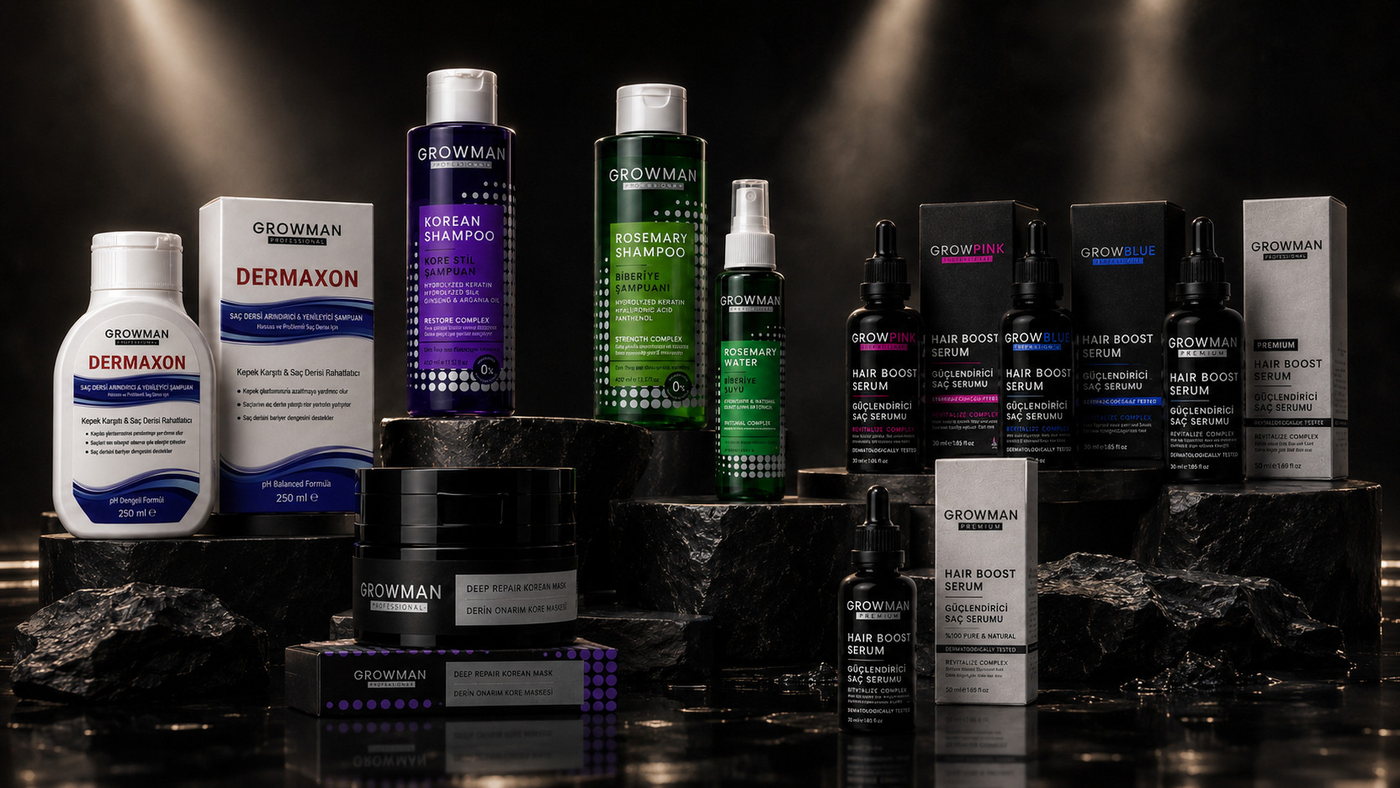
Distributors can place that formula discussion inside the broader Growman product portfolio and compare it with the companion guide to copper peptides in hair care.
The new Growman peptide serum launch pairs a 50 ml Copper Peptide Hair Care Serum — labelled with copper peptide, multi-peptide, niacinamide and biotin — with a complementary 30 ml Multi Peptide + Copper Peptide Skin Renewal Care Serum. This gives distributors a compact two-product story while keeping hair care and skin care roles clearly identified. Samples, current product information, available documents and export pricing can be requested from the Growman team.
That is why an importer should begin with the ingredient declaration rather than the campaign name. Ask the supplier to map the commercial name of the complex to the exact INCI entries in the final product. If the answer remains "a proprietary peptide blend," request the documentation needed by your safety assessor and regulator under confidentiality.
The wider scientific field is developing quickly. A 2026 study indexed on PubMed used computational design and experimental testing to identify a tripeptide aimed at binding hair keratin; the researchers reported improvements in tensile-strength testing for treated fibres under their study conditions. The hair keratin peptide study is a useful example of what good ingredient research looks like: a defined sequence, a stated test method and measured outcomes. It does not mean that every multi-peptide hair product strengthens hair by the same amount.
Why one formula may use several peptides
Peptides are not interchangeable. Their sequence, size, modification, carrier and formula environment affect what they can reasonably contribute. A multi-peptide formula may be designed around complementary roles rather than a single headline action.
From a commercial perspective, those roles normally fall into three groups:
- Scalp-focused care. Peptide-led leave-on products can support a premium scalp-care position when the cosmetic claims and evidence remain disciplined.
- Hair-fibre condition. Peptides may be selected for interaction with keratin, conditioning feel or the appearance of damaged hair.
- Formula support and storytelling. A technically coherent combination can differentiate the treatment step inside a wider routine.
The important word is coherent. Adding more peptide names does not automatically create a better formula. Each addition should have a documented purpose, remain stable in the finished base and contribute to claims the brand can substantiate.
A multi-peptide brief should explain that coherence before it discusses the number of actives.
A buyer should therefore ask the manufacturer to explain the formula in one sentence without using the number of actives as the main argument. "Five peptides" is a count. "A leave-on scalp serum supported by a conditioning routine" is a proposition.
How to read the product file
A distributor does not need the confidential percentages of a formula to perform a useful first review. The following documents reveal whether the multi-peptide story is real and export-ready.
Current INCI list
The list should match the product that will be manufactured and shipped. Check the exact peptide names, not only the presence of the word peptide somewhere in the list. Confirm that the artwork, product information and registration file all use the same version.
Raw-material specification
For a supplied peptide complex, request the technical data sheet, composition information available to the safety assessor, storage requirements and specification. If the supplier uses a branded raw material, the trademark name should never replace the required INCI declaration on pack.
Finished-product stability
Ask what was tested, for how long, at which temperatures and in which pack. Peptides can be sensitive to the surrounding system. The relevant question is not whether the raw material is stable in its drum; it is whether the finished serum, shampoo or mask remains within specification through its intended shelf life.
Claim support
Separate supplier literature, ingredient studies and finished-product testing. They can all be useful, but they support different levels of wording. A consumer-perception test on the finished formula can support sensory and appearance language. A laboratory study on an isolated peptide can explain the ingredient rationale. Neither should be made to do the other's job.
Regulatory review
The European Commission describes CosIng as an information database for cosmetic ingredients and stresses that an INCI listing does not itself establish legal approval for every use. Buyers can use the European Commission CosIng overview to verify terminology, then complete the market-specific safety and regulatory assessment required for the finished product.
Evaluating efficacy without overclaiming
Peptide hair care attracts search terms that sit close to regulated medical territory: hair growth, hair loss treatment, follicle activation and alopecia. High search volume does not make those phrases safe for cosmetic advertising.
Use a claims ladder during product review:
| Evidence level | Appropriate commercial use |
|---|---|
| Ingredient mechanism or laboratory study | Explain why the ingredient was selected, with clear limitations |
| Instrumental test on the finished formula | Support the exact measured hair-fibre or appearance outcome |
| Consumer-use study | Support perception statements for the tested population and period |
| General marketing language | Describe texture, routine role and cosmetic appearance without medical implication |
The safest claim is not always the weakest. Specific cosmetic wording often sells better because it tells the consumer what to expect: easier combing, a smoother feel, reduced appearance of breakage, improved manageability or fuller-looking hair. Those statements can be more useful at shelf than a dramatic phrase the retailer's legal team will reject.
The EU common criteria for cosmetic claims require truthfulness, evidential support, honesty, fairness and informed decision-making. Even outside the EU, that framework is a practical benchmark for export copy. It keeps one evidence file usable across markets and reduces the cost of rewriting artwork after a distributor review.
Research on short peptides and hair is promising but varied. Studies use different peptides, delivery systems, laboratory models and clinical populations. A recent PubMed-indexed overview of short peptides for hair loss highlights both the potential and the limitations of this area. For a cosmetics buyer, the correct conclusion is not that every peptide product works; it is that ingredient identity, delivery and finished-product evidence matter.
Stability, packaging and sensory performance
The best scientific deck cannot rescue a product consumers stop using. Multi-peptide hair care has to perform as a daily cosmetic.
Stability questions
Ask for appearance, odour, pH, viscosity and packaging observations across the stability programme. If the formula contains colour-sensitive ingredients, request aged sample photographs. If it uses a pump or dropper, confirm dose consistency and compatibility with the closure.
Packaging questions
The pack should match the use area. A scalp serum benefits from a nozzle or controlled pump that reaches between the hair. A treatment for lengths may work better in a pump or tube. Droppers can look premium, but they can also touch the scalp and return product to the bottle. Evaluate hygiene, leakage, dosing and consumer instruction together.
Sensory questions
Run a small structured test rather than passing samples around the office without a form. Score spread, absorption, residue, stickiness, scent, compatibility with styling products and appearance on dark hair. Record whether the test was on wet or dry hair and the amount used. The notes become training material for the distributor's sales team.
Climate questions
A serum that feels light in İstanbul may behave differently in Gulf humidity or a Central European winter. If the target market has a demanding climate, request samples early enough to test locally before artwork and launch quantities are fixed.
Turning the formula into a sellable routine
Multi-peptide hair care becomes easier to merchandise when the routine has a clear hierarchy. Start with one hero and no more than three supporting products.
- Hero treatment: the multi-peptide serum or intensive mask carries the ingredient story and premium margin.
- Compatible cleanser: the shampoo supports regular use without competing for the headline.
- Conditioning step: the mask or conditioner supplies immediate sensory value and strengthens repeat purchase.
- Optional specialist: one botanical or repair reference can extend the routine for a distinct consumer need.
For e-commerce, build the product page around decision questions rather than ingredient repetition. Explain what multi-peptide means in this formula, who the product is designed for, where it sits in the routine, how often it is used, what it feels like and which claims are supported. Add the complete INCI list, pack size and warnings required in the market.
For wholesale buyers, add what a consumer page does not need:
- Reference numbers and barcodes.
- Units per carton and carton dimensions.
- Samples and tester policy.
- Available product and safety documentation.
- Artwork and local-language process.
- Preparation time and written trade terms.
This information is SEO content too. Buyers search for "multi-peptide hair serum supplier" because they need a source, not a lecture on amino acids. A page that combines accurate ingredient education with commercial detail is more likely to generate qualified enquiries.
The multi-peptide story should remain consistent across the technical file, label, product page and distributor presentation.
Red flags in a multi-peptide proposal
Pause the evaluation when:
- The supplier will not identify the INCI names behind the blend.
- The number of peptides changes between the presentation, label and specification.
- All claims come from raw-material brochures with no finished-product rationale.
- Medical language appears on the website but not in the regulatory file.
- The sample is a laboratory decant rather than normal retail production.
- No one can explain stability, packaging compatibility or storage conditions.
- The product page repeats trend keywords but omits directions, pack size and responsible business details.
These are not small editorial issues. They predict later problems with registration, retailer approval, consumer expectations and repeat orders.
A distributor's decision framework
Score the product across five headings before discussing volume:
| Area | Decision question |
|---|---|
| Formula | Are the peptide identities and roles clear? |
| Evidence | Does the support match the exact proposed claims? |
| Experience | Is the product pleasant and practical enough for repeat use? |
| Compliance | Can the file support registration and local artwork review? |
| Commercial fit | Does the routine, pack and landed price fit the target channel? |
A product that scores well in four areas but fails compliance is not ready. A product that passes compliance but feels poor will not repeat. The point of the framework is to keep the fashionable ingredient from hiding an ordinary commercial weakness.
A disciplined multi-peptide evaluation keeps the buyer focused on formula quality, evidence and repeat-purchase potential rather than trend language alone.
Frequently asked questions
What is a multi-peptide hair serum?
It is a leave-on hair or scalp product formulated with more than one peptide or with a supplied peptide complex. The phrase alone does not identify the ingredients, so buyers should verify the exact INCI list and product documentation.
Are more peptides always better?
No. Formula coherence, stability, use level, delivery, sensory quality and supporting evidence matter more than the number printed on the front label. Every peptide should have a clear role.
Can a multi-peptide cosmetic claim hair growth?
Claims depend on the product's regulatory status, market and evidence. Cosmetic products should avoid implying treatment of hair-loss disorders and should use substantiated wording about care, condition and appearance.
What documents should a distributor request?
Request the current INCI list, raw-material and finished-product specifications, stability summary, claim support, safety and registration documents required by the market, packaging details and normal-production samples.
How should a multi-peptide product be merchandised?
Use it as the hero step in a concise routine with a compatible shampoo and conditioning product. Explain ingredient identity, routine position, directions and cosmetic benefit clearly, then support the B2B page with pack, carton, sample and documentation information.
Planning a peptide-led professional hair care range?
Ask for the new 50 ml Copper Peptide Hair Care Serum and 30 ml Multi Peptide + Copper Peptide Skin Renewal Care Serum. We will provide evaluation samples, current product information, pack details and a market-specific export quotation.